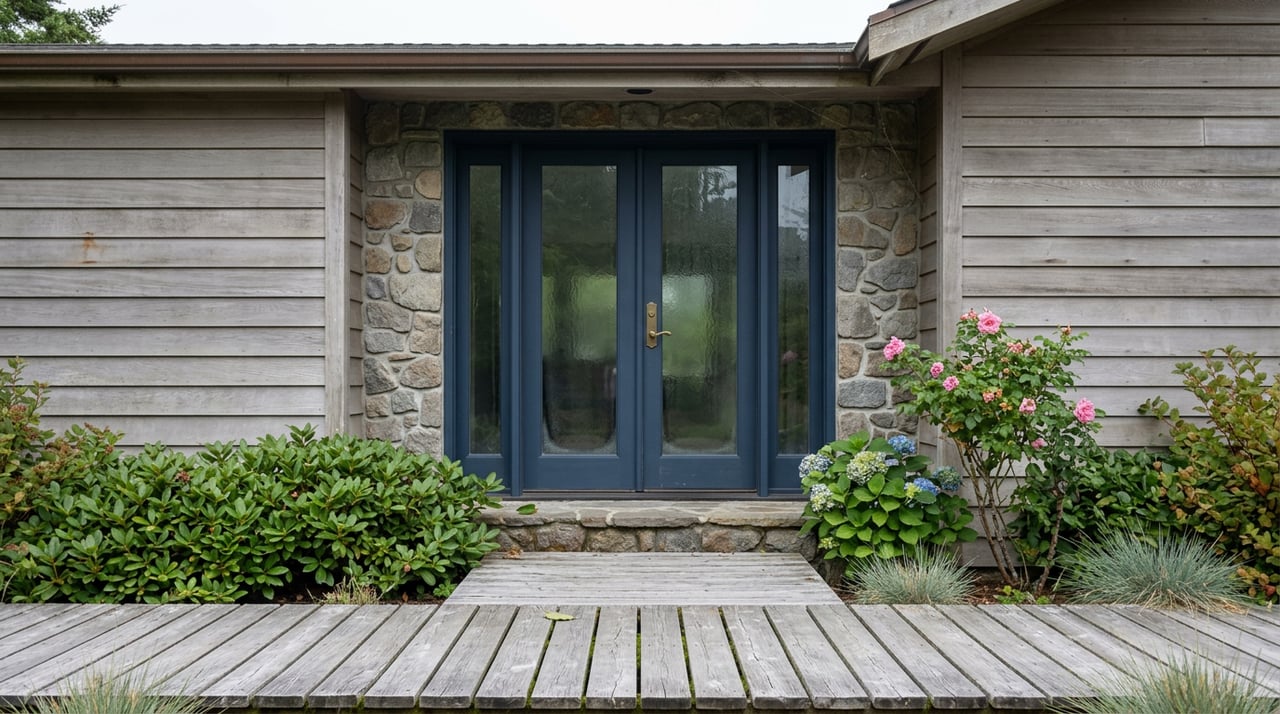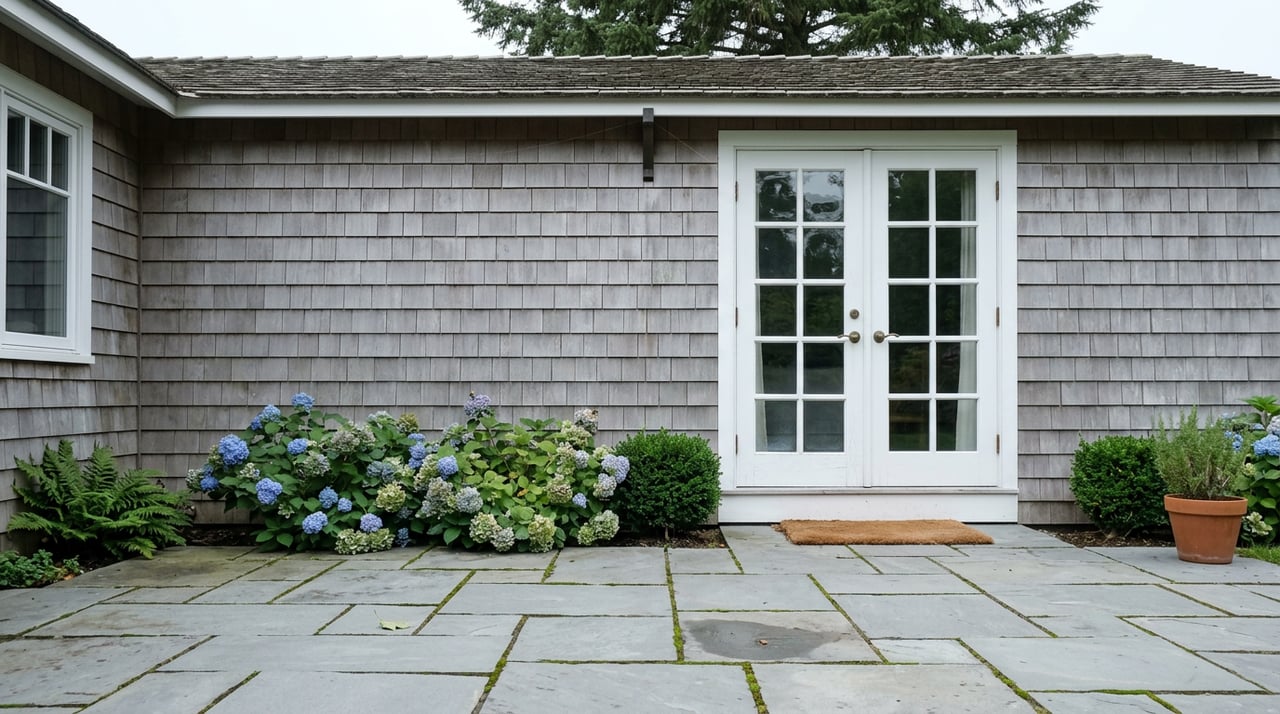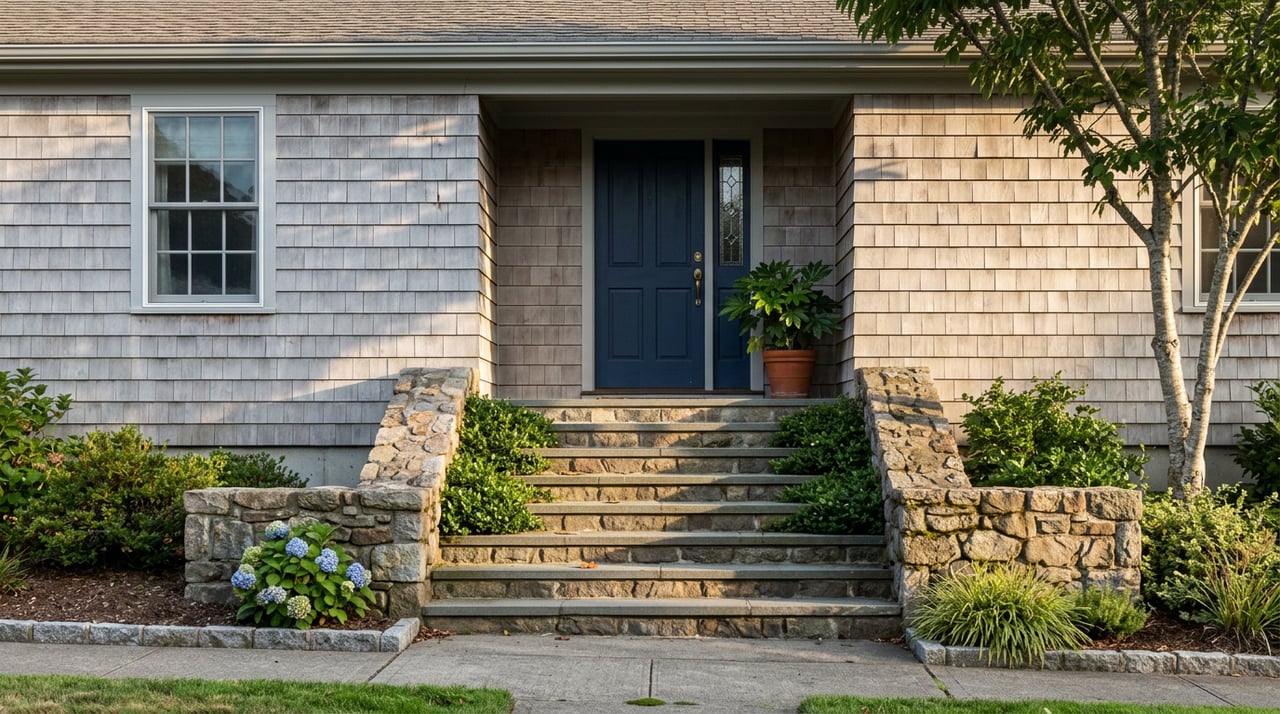
Search "Jefferson Street, Cannon Beach" and two different houses come up. One sits a few doors from Ecola Court, close enough to hear the surf from the porch. The other sits on the far side of Hemlock Street, tucked into a stand of Sitka spruce, quiet in a different way. Same city. Same street name. Two buyers comparing them on price per square foot alone are comparing the wrong thing.
That confusion isn't an accident of Cannon Beach's platting. The town's presidential-named grid, Jefferson, Madison, Van Buren, Adams, repeats itself on both sides of Hemlock Street, the commercial spine that runs through the middle of town. The version near Ecola State Park is the one most buyers picture when they hear "Presidential Streets." The version east of Hemlock carries the same names attached to a different product entirely: more privacy, larger lots, homes tucked into wooded settings, and a location that trades beach proximity for a workday-resident feel rather than a resort one.
That's the starting friction. It isn't the only one, and it isn't even the most expensive one to misunderstand.
What a single Cannon Beach price range actually blends together
Cannon Beach carries the highest three-bedroom starter-home price among Oregon's coastal cities. Market reporting published in late June 2026 put the town's median in the luxury tier of coastal markets, with days on market as tight as three weeks for well-priced listings. A separate cost-of-living guide, published earlier that same month, put the median sold price closer to seven figures, with average days on market closer to twelve weeks. Both can be true at once, because "Cannon Beach" isn't one market. It's several small pockets with very different turnover speeds, and a single median blends a downtown cottage that sold in five days with a hillside estate that sat through a slow winter.
Local buyer's guides describe the geography this way:
| General location | What buyers report | |
|---|---|---|
| Downtown / Hemlock corridor | Village core along Hemlock Street | Premium pricing, homes routinely draw multiple offers within days |
| Tolovana Park | Southern end of town, near Tolovana Beach State Recreation Site | Similar walkability premium to downtown, slow inventory turnover |
| West Presidential Streets | Near Ecola State Park, on the beach side of Hemlock | Closest beach access among the presidential-named streets |
| East Presidential Streets | East of Hemlock | More lot size and privacy, reported entry points anywhere from the mid-$700s to roughly $1 million depending on which guide you read |
| Haystack Heights | Hillside east of Hemlock, climbing into forested terrain | Custom and craftsman-style homes, valued partly for elevation |
Notice the spread on that East Presidential Streets row. Two different local guides describing the same pocket land on ranges that don't fully overlap, one citing homes under $750,000, another citing $800,000 to $1 million. That's not sloppy reporting. It's what happens when a small transaction pool, sometimes a handful of closings in a given quarter, gets described in aggregate. A buyer working from a portal search alone won't see that spread. A buyer working from someone who tracks these pockets closing by closing will.
Elevation, not the map grid, decides your insurance conversation
Here's where the street-name story gets more interesting, and where it stops being simply "closer to the beach costs more." Flat properties near the shoreline, including sections of both the west-side Presidential Streets and the downtown core, sit within Oregon's mapped tsunami inundation zone. That mapping affects insurance underwriting and shapes how a listing gets positioned at resale.
But elevation cuts across the tidy west-equals-risk, east-equals-safe assumption. Certain hillside pockets, specifically parts of Haystack Heights and portions of the west-side Presidential Streets that sit high enough above the flat, are marketed specifically as sitting outside the primary inundation zone. In other words, two homes on the same side of Hemlock, even on the same block, can carry different insurance conversations depending on where the land starts climbing. The street name tells you almost nothing here. The topo line tells you everything.
For a buyer comparing pockets, this means the question isn't "which side of town." It's "what's the elevation, and has the seller shown documentation of the zone designation." That's a five-minute conversation with a title company or the city, and it changes the insurance quote enough to matter.
The rental income math got rationed, and it didn't happen evenly
Every conversation about Cannon Beach pricing eventually runs into short-term rental income, because for years that income was part of how buyers justified paying a premium for a beach-adjacent address. That justification is being actively narrowed by the city, and the narrowing has a specific geography attached to it.
In the summer of 2025, Cannon Beach's City Council directed staff to draft an ordinance capping the total number of short-term rental permits in town. Councilors floated numbers all over the map before settling on a target: Mayor Barb Knop proposed 150, councilors Hayes and Hammond each proposed 175, Councilor Lisa Kerr proposed 125, and Councilor Ostrander suggested holding close to the existing count near 195. The council landed on 165 as its working target, to be reached over time through attrition rather than revocation, meaning permits expire when a property sells rather than transferring to the new owner.
What made that debate specific rather than abstract was where the pressure came from. Residents of Haystack Heights spoke at the meeting about rental density in their own streets, and Councilor Kerr noted the same complaints had surfaced in the Presidential Streets, the north end of town, and Tolovana, as reported by the Cannon Beach Gazette. Kerr put the underlying tension plainly:
"Every part of the community had a desire for a neighborhood of their own."
By early 2026, the city's own planning materials show the cap ordinance still moving through Planning Commission review, months after that initial council direction, with a February 2026 draft edition and staff presentation still in process. What's already in effect, separate from the cap itself, is the city's three-tier permit structure: lifetime-unlimited, five-year-unlimited, and 14-day permits, laid out in the city's short-term rental code. New applicants today qualify only for the 14-day tier. The two more valuable categories are effectively closed to new buyers, and the city's current permit lists are what any serious buyer should ask to see before assuming a property's rental history carries forward.
That matters directly for the street-grid story above. The neighborhoods named in the council debate, Haystack Heights, the Presidential Streets, and Tolovana, are the same pockets where rental income once helped justify the highest asking prices. If that income line is now capped, non-transferable, and being phased down through attrition rather than growth, the premium those addresses commanded needs a new explanation. Sometimes that explanation is genuine, walkability and views hold value on their own. Sometimes it was rental math dressed up as lifestyle math, and the two get harder to tell apart until a permit doesn't transfer at closing.
Why the cheaper pocket still isn't easy to negotiate
A buyer might assume the East Presidential Streets or Haystack Heights, being the more affordable pockets, come with more room to negotiate. That assumption runs into a structural fact about Cannon Beach's housing stock: 2020 Census data put roughly 63 percent of the town's housing units as vacant or seasonally occupied, a reflection of how much of the town functions as second homes rather than primary residences. Combined with a city footprint of only 1.8 square miles, that means long-term inventory stays thin everywhere, not just downtown. A well-priced home in the more accessible pockets still tends to move quickly, because the absolute number of homes changing hands in any given season is small enough that a handful of motivated buyers can absorb the supply.
What this means if you're comparing pockets today
If you're working from a portal listing or a printed range, ask which side of Hemlock a "Presidential Streets" address actually sits on before comparing it to anything else. Ask whether the parcel has documentation on tsunami zone status, since elevation, not the street grid, decides that. And if a listing's value pitch includes rental income potential, ask specifically which permit tier applies and whether it transfers, because under the current code it very likely does not.
None of this makes Cannon Beach a bad place to buy. It makes it a place where the address on the listing sheet is the beginning of the research, not the end of it.
FAQ
Does an existing short-term rental permit transfer when a home sells? Under the city's current structure, lifetime and five-year permits are non-transferable and are being phased out through attrition, meaning the permit lapses at sale rather than passing to the new owner. New buyers currently qualify only for the 14-day permit category. Confirm status directly with Cannon Beach's Community Development Department before factoring rental income into an offer.
Is being closer to the beach the same as being in the tsunami inundation zone? Not entirely. Flat land near the shoreline generally falls within the mapped zone, but elevation matters more than which side of Hemlock a property sits on. Some hillside sections of Haystack Heights and the west-side Presidential Streets sit outside the primary zone despite being on the beach side of town.
Is the 165-permit short-term rental cap already in effect? As of the city's most recently published planning materials, the ordinance was still in Planning Commission review, with draft revisions dated into early 2026. Ask for the current status before assuming any cap number is final.
If you're weighing which Cannon Beach pocket actually fits your budget and your plans, not just the median you saw on a search result, Cindy Hawkins Colley has spent decades tracking these blocks closing by closing. Let's Connect and talk through what a specific street, on a specific side of town, actually means for your offer.